
Visit to Lilford Park in Leigh
By Sue and Terry Kelly
On 30th April 2024 we visited Leigh on a family matter. Amazingly, the sun had appeared and as it was a warm, pleasant afternoon, we decided to take a stroll in Lilford Park and Lilford Woods. In our younger days, we visited the park regularly and thought it would be interesting to see if it had changed. In fact, the park has changed considerably; gone were the flower beds and shrubberies which have been grassed over and the two Bowling Greens are now 5-a-side pitches. There is still a very nice children’s playground and new “healthy” walks have been laid out. However, it is none-the-less a valuable recreation space for the people of Leigh and is still a pleasant park to visit. As we walked through the park towards Lilford Woods, we were amazed to see a new COVID memorial garden being created.
We spoke to the Gardener who told us that there is another COVID memorial garden in Wigan. Wigan Council’s website states that Wigan and Leigh wanted to acknowledge the enormous loss caused by COVID and to recognise the inspirational and admirable contribution that local communities have made. Further to recognise the ongoing impact of COVID-19 and help people to look to the future.
Consultations took place from September 2021 to January 2022, to agree an approach to developing and delivering a Wigan Borough COVID-19 memorial.
The consultation covered a wide range of organisations, ethnic and social groups and there was overwhelming support for a COVID-19 memorial. At first there were a range of views on what it should be but the following themes emerged as key factors for a COVID-19 memorial.
- Serve a purpose
- Offer opportunities for quiet reflection
- Help to overcome the negative impacts of the pandemic – encourage social interaction, offer opportunities to meet with others, support confidence building
- Support people and organisations to connect and network with each other for future benefit
- Support and improve health and wellbeing.
- Be accessible
- Easily accessed by everyone in the Borough, either in their immediate locality or easily accessed by public transport
- Inclusive – access should not be limited by barriers e.g. economic, social, cultural, disability etc.
- Free to access, outdoors, utilising the borough’s green spaces.
- Tell the collective story of the Borough’s experience
- Benefit the whole Borough and allow the people of each ward to tell their own story
- Communities should offer their stories – providing different perspectives on the pandemic experience
- Allow strands of the story to connect and come together at a focal point in the Borough.
- Involve people
- Further consultation throughout the whole process
- Engagement and other specific projects in locations across the Borough, that are led by community groups / individuals
- Contribute to the design, form, content and construction of the memorial(s).
Funding for the project has been provided by Wigan Council along with contributions from section 106 developer proceeds and the borough’s UK Shared Prosperity Fund allocation.
Lilford Park
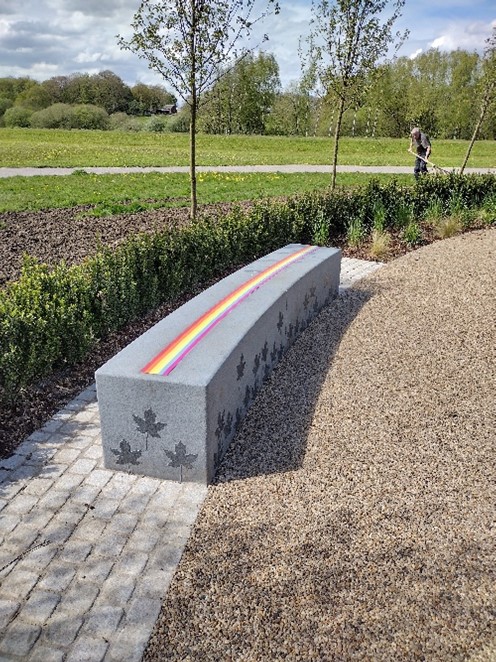
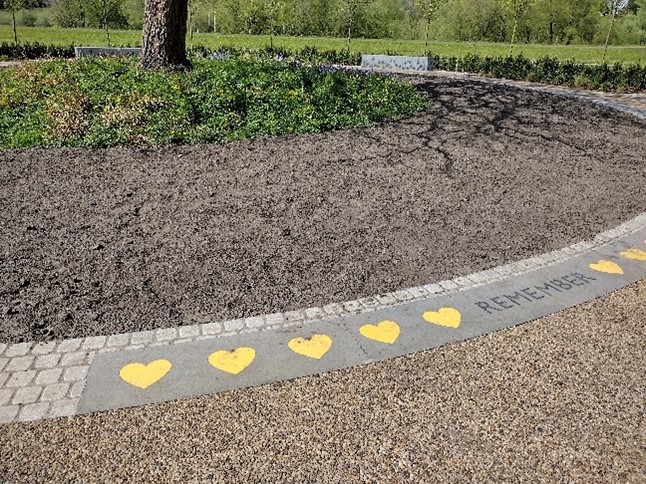
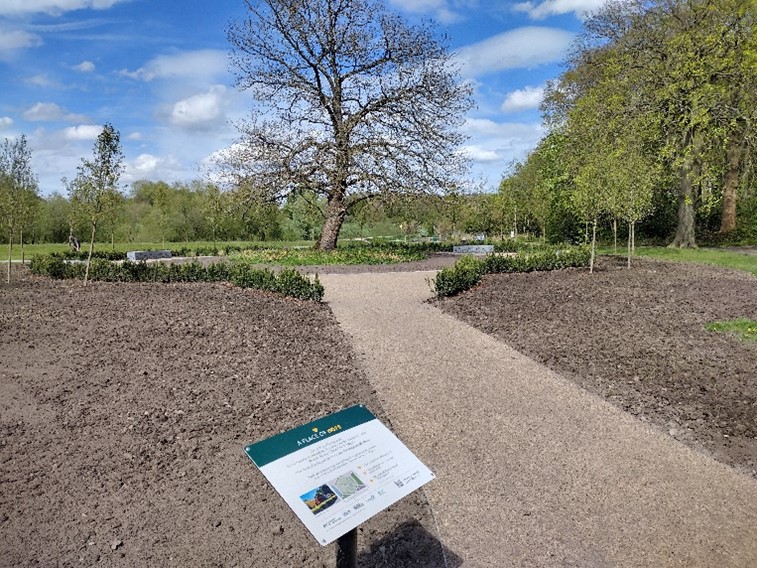
The photos below show the garden in Lilford Park 30th April 2024 as it is nearing completion, the areas of bare soil are to be turfed to finish the work.
Mesnes Field
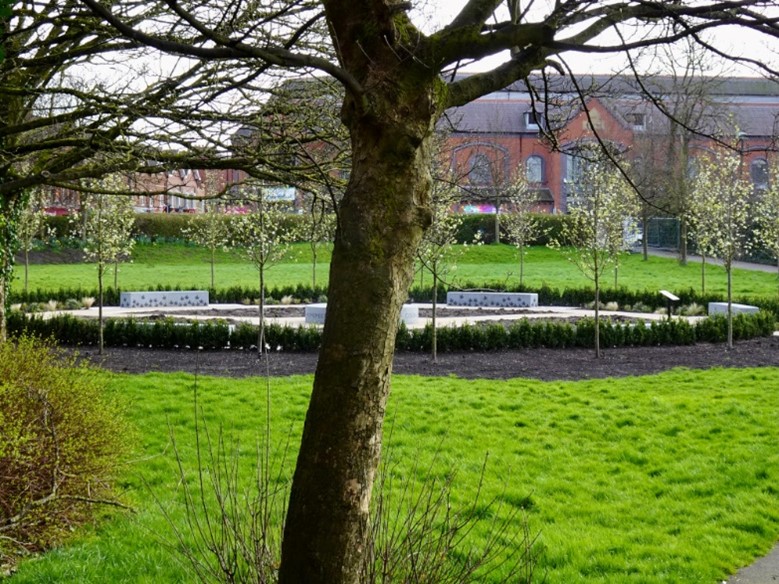
The gardener told us that there is another COVID remembrance garden at Mesnes Field, in Wigan, as shown in the photo below taken from Wigan world website.
Further information about the COVID memorial gardens can be found via the following link, where there are also links to the garden designs and planting schemes.
Remember, reflect, recover – Wigan Borough COVID-19 memorial
Some interesting facts about Lilford Park
In 1885, a Public Park Committee was formed by Leigh Council, recognising the need for access to clean air and open space. In 1886, there was a march by “The Thousand Lads of Leigh” with the slogan “We want a playground”.
The Committee approached The 4th Lord Lilford who agreed to hand over some land around The Avenue and Atherton Lake. (Lord Lilford was a keen ornithologist who is credited with introducing the Little Owl to England). He was however an absentee landlord who had plans to build on the land, but those plans had fallen through, and he agreed to provide the land subject to payment of a nominal rent. The Park Committee would also need to find the funds to create the park and to erect a fence around the park and pay for upkeep and maintenance.
John Drabble, a machine painter at Harrison McGregor & Co presented two paintings for the Committee. Solomon Partington, Editor of the Leigh Journal, asked John to paint the park as he saw it. His design showed the park all the way down The Avenue with flower beds, benches, swings and rowing boats and landing stage on Atherton Lake. Solomon also organised a petition of 6000 local people which he sent, with the designs, to Lord Liford.
Eventually, in 1913, Mayor Joseph Ashworth called on all the wealthy men of the town to support providing at least one park for all the citizens. Thanks to Mayor Ashworth’s efforts, the land was finally given by the 5th Lord Lilford and Lilford Park was finally completed and opened 5th June 1915.